

Master the craft of wild yeast. Learn to nurture a simple flour-and-water starter to bake artisanal, tangy loaves with a perfect, crackling crust.
Making sourdough bread is more than just baking; it’s a relationship. It’s about nurturing a living culture, understanding its needs, and celebrating its unique contribution to your kitchen. For many, the idea of creating a sourdough starter from scratch, or even just maintaining one, feels like a complex scientific experiment. However, with a little patience and consistency, anyone can cultivate a thriving starter and produce artisanal loaves.
The Foundation: Your Sourdough Starter
A sourdough starter is essentially a fermented mixture of flour and water. Wild yeasts and beneficial bacteria, naturally present in flour and the air around us, colonize this mixture, feasting on the carbohydrates in the flour. This fermentation process creates the gases that make your bread rise and imparts the characteristic tangy flavor.
Creating Your Own Starter:
-
Day 1: Mix 50g whole wheat flour with 50g lukewarm water in a clean glass jar. Stir well until no dry lumps remain. Loosely cover the jar (a lid resting on top or a piece of cloth secured with a rubber band works well) and leave it at room temperature (around 70-75°F or 21-24°C) for 24 hours.
-
Day 2-3: You might see some small bubbles forming, indicating activity. Discard about half of the starter, then feed it with another 50g whole wheat flour and 50g water. Repeat this feeding process every 24 hours.
-
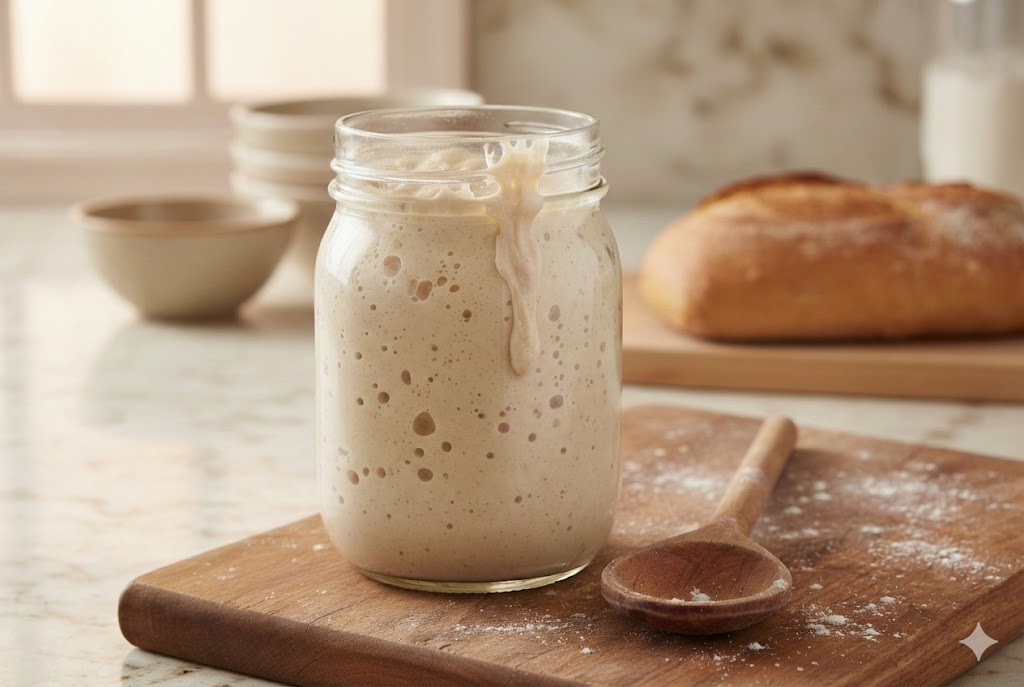
Day 4-7 (or more): As your starter matures, you’ll notice more consistent bubbling, a pleasant yeasty-sour smell, and it will often double in size a few hours after feeding. Once it consistently doubles within 4-8 hours after feeding, it’s considered “active” and ready to bake with.
Maintaining Your Starter
Once active, your starter needs regular feeding to stay healthy. If you’re baking frequently (daily or every other day), keep it on the counter and feed it once or twice a day. For less frequent baking, store it in the refrigerator. Cold temperatures slow down fermentation, meaning you only need to feed it once a week. Just remember to take it out, feed it, and let it become active at room temperature for several hours before you plan to bake.
Sourdough baking is a journey of discovery. Each loaf tells a story, influenced by your starter, your flour, and even the ambient temperature in your kitchen. Embrace the learning process, and soon you’ll be pulling fragrant, crusty loaves from your oven, a testament to your patience and newfound skill.


 TRENDING SEARCHES
Join the Convo